


Buying a bulletproof vest is not like buying regular gear. It’s a decision that directly impacts your safety, and in some cases, your life. Yet a lot of people still get it wrong, either by focusing too much on price or by not understanding what actually matters when choosing the right protection.
Understand Your Threat Level First
Before anything else, you need to be clear about what you’re protecting yourself against. Not every bulletproof vest is designed for the same purpose. Some are built purely for ballistic protection against firearms, while others are designed to resist knives or spikes. In many real-world situations, a combination of both makes the most sense.
If there is any realistic chance of firearm exposure, you should always choose a certified bulletproof vest. Going too light on protection is not a smart gamble. This is one of those decisions where “good enough” simply isn’t good enough.
Certification Matters More Than Marketing
Once you understand your threat level, certification becomes the next critical factor. A proper bulletproof vest should always be tested according to recognized standards such as NIJ or VPAM. These certifications define exactly what kind of ammunition the vest can stop and how much impact is transferred to your body.
That last part is important. A bulletproof vest is not actually “bulletproof” it is bullet-resistant. Even if it stops a round, the force of the impact can still cause serious injuries like broken ribs or internal damage. Anyone who tells you otherwise is either overselling or doesn’t understand the product.
Fit Is What Makes It Work
A bulletproof vest only works if it fits properly. This is where a lot of people go wrong.
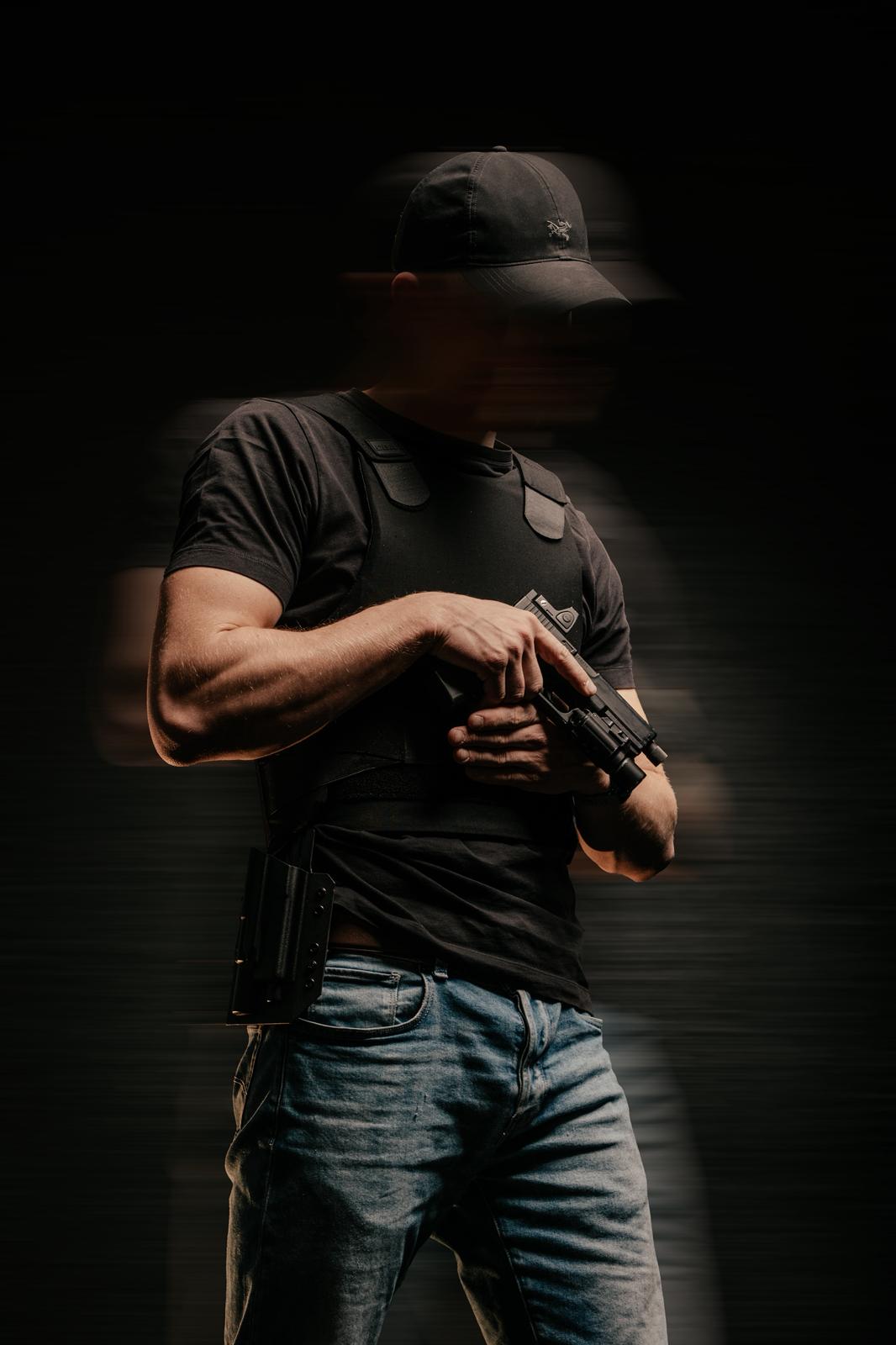
The vest should cover your vital organs, from the navel up to the clavicle, without extending too low or being too wide. Too long, and it restricts movement. Too wide, and it limits your arms. Too loose, and it can shift at the worst possible moment.
A good fit should feel secure and close to the body, similar to a fitted t-shirt. Not uncomfortable, but definitely not loose.
Finding the Balance Between Protection and Comfort
There’s always a trade-off between coverage and usability. More protection usually means more weight, more heat, and less freedom of movement.
For everyday or concealed use, most people are better off with lightweight, flexible soft armor that they can wear for long periods. Because that’s the reality, if a vest is uncomfortable, you won’t wear it consistently. And a vest you don’t wear offers zero protection.
Weight and Materials Make the Difference
Modern bulletproof vests are not what they used to be. Thanks to advanced materials, today’s high-quality vests can be relatively thin, lightweight, and still highly effective.
That said, not all materials are equal. The performance of a vest depends heavily on what’s inside it. High-end vests use advanced fibers like aramid or ultra-high molecular weight polyethylene to absorb and disperse energy. Lower-quality products may look similar, but their performance can be inconsistent.
If something is marketed as “cheap” or “budget,” you should question where the compromise is. In this category, cheaper usually means weaker, heavier, or less reliable.
Covert or Overt: Choose the Right Type
Bulletproof vests are generally designed to be worn either concealed or visible.
Covert vests are worn under clothing and focus on being lightweight, thin, and discreet. These are ideal for everyday use, security professionals, or anyone who needs protection without drawing attention.
Overt vests are worn over clothing and are often used in military or law enforcement environments where visibility and modularity are more important than concealment.
The right choice depends entirely on your situation, but for most civilian and low-profile professional use, covert is the smarter option.
Never Buy a Used Bulletproof Vest
This one is simple: don’t do it.
A used bulletproof vest may have hidden damage from heat, moisture, or previous impacts. You won’t see that damage, but it can seriously reduce the level of protection. Saving a small amount of money is not worth taking that risk.
Maintenance Is Part of Ownership
A bulletproof vest is not something you buy and forget. It requires proper care to maintain its performance.
Ballistic panels should never be washed or exposed to harsh conditions. The outer carrier can be cleaned, but the protective materials inside need to stay sealed and intact. Regular inspection is also important to make sure everything is still in good condition.
Final Thoughts
Choosing the right bulletproof vest comes down to a few key principles. You need certified protection that matches your risk level, a fit that allows full mobility, and materials you can rely on. Everything else is secondary.
At Dutch Body Armor, the focus is on exactly that: developing bulletproof vests that combine protection, comfort, and real-world usability. No unnecessary bulk, no compromises, just equipment designed to perform when it actually matters.
Because when the moment comes, your gear shouldn’t be a question mark.
Share:
What Are Bulletproof Vests Made Of?