


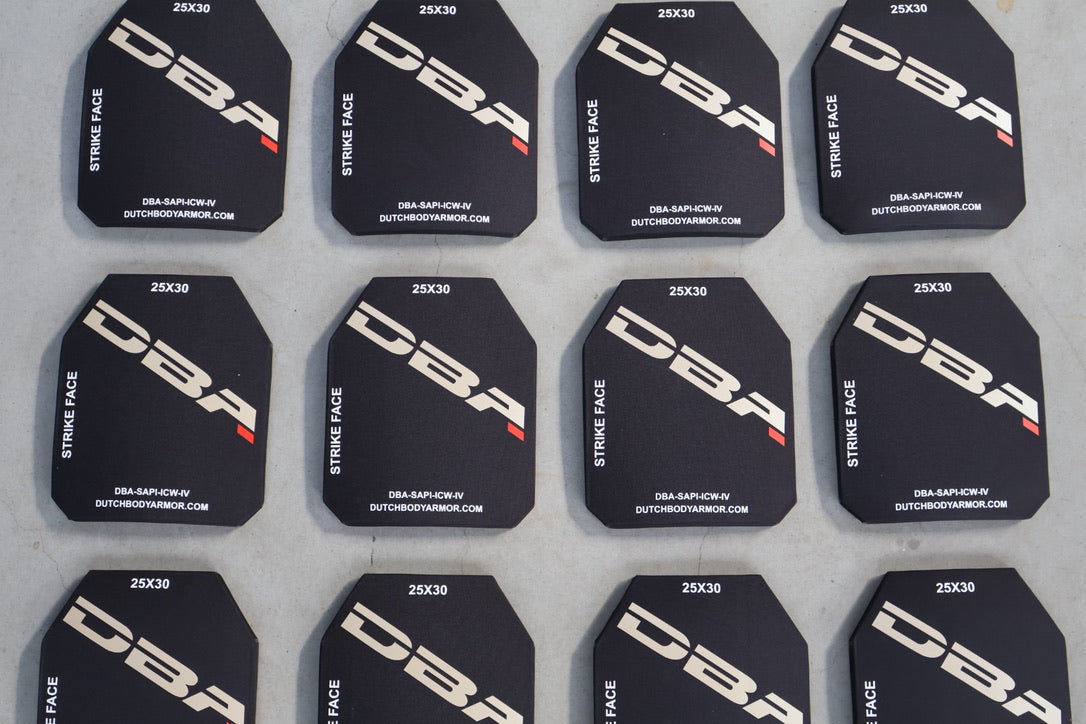
What Are Hard Armor Plates?
Hard armor plates are rigid ballistic inserts designed to protect against rifle threats. Unlike soft body armor, which is primarily intended to stop handgun ammunition, hard armor plates are engineered to defeat high-velocity rifle rounds.
They are commonly used by military personnel, law enforcement officers, security professionals, and civilians seeking a higher level of ballistic protection. When combined with a quality plate carrier, hard armor plates provide critical protection to the chest and back while maintaining mobility in demanding environments.
Modern hard armor plates are typically manufactured from ceramic, UHMWPE (Ultra-High Molecular Weight Polyethylene), or a combination of advanced composite materials. Each material offers its own balance of protection, weight, durability, and comfort.
Understanding the differences between protection levels, materials, and plate designs is essential when selecting the right ballistic plate for your specific requirements. The right choice depends on your threat profile, operational environment, and the level of comfort and mobility required during use.
Understanding Protection Levels
Hard armor plates are commonly classified according to the National Institute of Justice (NIJ) standards. These standards provide a benchmark for ballistic performance and help users compare different armor solutions.
Choosing the correct protection level is one of the most important factors when selecting a hard armor plate. While higher protection levels generally offer increased ballistic resistance, they can also result in additional weight and thickness.
NIJ Level III
Level III plates are designed to stop rifle threats such as 7.62×51mm NATO FMJ and .308 Winchester rounds. They provide reliable rifle protection while maintaining a relatively lightweight profile.
For many law enforcement and security applications, Level III plates offer an excellent balance between protection, weight, and mobility.
NIJ Level III+
Although not an official NIJ rating, Level III+ is widely used throughout the armor industry. These plates are typically tested against additional threats such as 5.56×45mm M855 Green Tip, M193, and 7.62×39mm ammunition.
Level III+ plates have become increasingly popular due to their ability to address some of the most commonly encountered modern rifle threats while remaining lighter than many Level IV solutions.
NIJ Level IV
Level IV plates offer the highest commonly available level of protection and are tested to stop .30-06 M2 Armor Piercing (AP) ammunition.
These plates are often chosen by military units, tactical teams, and users operating in high-risk environments where armor-piercing threats may be present.
Ceramic vs UHMWPE Plates
Selecting the right plate material is just as important as choosing the correct protection level. Each material offers distinct advantages depending on the intended application.
Ceramic Plates
Ceramic plates are the most commonly used hard armor solution worldwide and are trusted by military and law enforcement professionals across the globe.
Advantages
-
Excellent ballistic performance
-
Effective against armor-piercing threats
-
Good balance between protection and weight
Considerations
-
Can be damaged by severe impacts
-
Generally more expensive than steel alternatives
Ceramic plates are often considered the preferred choice for users seeking maximum protection without the excessive weight associated with traditional steel armor.
UHMWPE Plates
UHMWPE plates are manufactured from ultra-high molecular weight polyethylene fibers and are known for their extremely low weight.
Advantages
-
Extremely lightweight
-
Comfortable during extended wear
-
Corrosion resistant
Considerations
-
Usually thicker than ceramic plates
-
Certain rifle threats require hybrid construction
For users who prioritize mobility and long-term comfort, UHMWPE plates can be an excellent solution.
Choosing the Right Hard Armor Plate
Selecting the correct ballistic plate starts with understanding the threats you are most likely to face.
For users operating in environments where rifle threats are possible, hard armor plates provide a significant increase in protection compared to soft armor alone. However, selecting the highest protection level is not always the best solution. Weight, comfort, mobility, and mission requirements should all be considered when making a decision.
Key factors to consider include:
-
Protection level
-
Plate material
-
Weight
-
Thickness
-
Comfort
-
Intended use
The best hard armor plate is not simply the one with the highest rating, but the one that provides the right balance between protection, mobility, and comfort for your mission.
Final Thoughts
Hard armor plates play a critical role in modern ballistic protection systems. Whether you choose a Level III, III+, or Level IV plate, understanding the differences in protection levels, materials, and configurations will help you make an informed decision.
Modern ballistic technology has made hard armor plates lighter, stronger, and more comfortable than ever before, allowing users to achieve rifle-rated protection without unnecessarily sacrificing mobility.
At Dutch Body Armor, we believe that effective protection is about more than stopping a threat. It is about delivering the right balance of protection, comfort, mobility, and reliability when it matters most.
Share: